Back
Share


STOSA CUCINE
An Italian Philosophy of Home,
Ritual and Emotion
安放家庭日常與情感的義式哲學
人類文明歷經數萬年演化,居住型態也隨著地域與文化的不同,呈現出多元樣貌。
時至今日,人們仍持續在追求更有效率的備餐、儲藏與烹飪環境,不斷升級材質、空間與設備。
倘若我們願意回歸本質思考:火、水與食物這些自遠古以來與生存相連的元素,始終貫穿每個時代,
那麼當代家庭的核心不止於關注如何生活(Living),更在乎如何將這些原點條件,
安放進日常具情感的連結之中。一片來自義大利托斯卡尼的木料,其本質便是一首關於「觸覺」的詩。
自 1964 年以來,STOSACucine 的故事便不曾離開對於這份肌理的凝視與情感,
在工匠反覆確認尺寸與厚度的指梢下,它褪去表層粗糙被賦予文化的刻度:
從托斯卡尼的森林到地球另一端私密住宅,木料的運送即是關於空間轉譯的起點,
建造「空間愉悅(Plaisir)」的開端,讓美好的時間在廚房裡慢下來
,材料的溫度成為喚醒餐桌記憶的情感符號,
讓人在這裡度過的時光,成為能被記錄、閱讀和感受沈浸愉悅的文本。
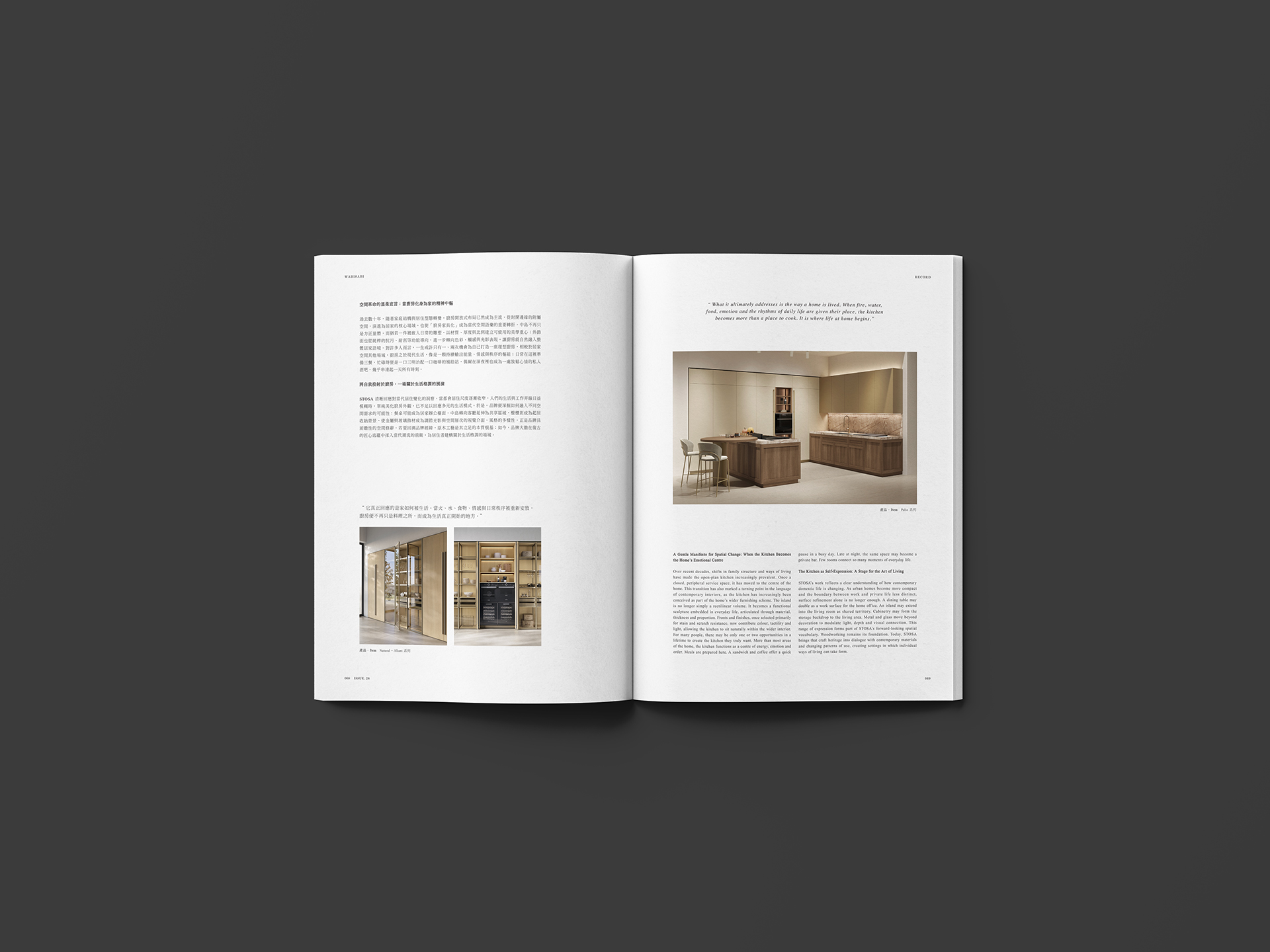
空間革命的溫柔宣言:當廚房化身為家的精神中樞
過去數十年,隨著家庭結構與居住型態轉變,廚房開放式布局已然成為主流,從封閉邊緣的附屬空間,
演進為居家的核心場域,也使「廚房家具化」成為當代空間語彙的重要轉折。
中島不再只是方正量體,而猶若一件被嵌入日常的雕塑,以材質、厚度與比例建立可使用的美學重心;
外飾面也從純粹的抗污、耐刮等功能導向,進一步轉向色彩、觸感與光影表現,讓廚房能自然融入整體居家語境。
對許多人而言,一生或許只有一、兩次機會為自己打造一座理想廚房,
相較於居家空間其他場域,廚房之於現代生活,像是一顆持續輸出能量、情感與秩序的樞紐:
日常在這裡準備三餐,忙碌時便是一口三明治配一口咖啡的補給站,
偶爾在深夜裡也成為一處放鬆心情的私人酒吧,幾乎串連起一天所有時刻。
將自我投射於廚房,一場關於生活格調的展演
STOSA 清晰回應對當代居住變化的洞察。當都會居住尺度逐漸收窄,人們的生活與工作界線日益模糊時,
單純美化廚房外觀,已不足以回應多元的生活模式。於是,品牌便深掘如何融入不同空間需求的可能性:
餐桌可能成為居家辦公檯面,中島轉向客廳延伸為共享區域,櫥櫃則成為起居收納背景,
使金屬與玻璃飾材成為調節光影與空間層次的視覺介面。風格的多樣性,
正是品牌具前瞻性的空間修辭。若要回溯品牌經緯,原木工藝是其立足的本質根基;
如今,品牌大膽在復古的匠心底蘊中揉入當代潮流的前衛,為居住者建構關於生活格調的場域。
「多元材質選擇」便是 STOSA 引以為傲的核心靈魂。
為了精準貼合使用者個性,從溫潤的原木、鏡面與霧面烤漆、立體紋理板到低奢金屬,
乃至高端的奈米智慧材 Fenix或蝕刻玻璃等多樣選擇,於空間中建立高度個人化的秩序;
Evolution System 也提供更全面的整合邏輯,將收納效率、抽屜比例、家電尺寸與全高櫃體的立面化配置,
納入同一套模組系統之中;吧台、牆板與起居區收納模組,則進一步柔化廚房、餐廳與起居空間之間的界線,
使個人化不止於表面選擇,轉而成為真正理解生活的設計能力。
當廚具走向建築化,STOSA 的全屋系統語言
在 2026 年米蘭 EuroCucina 中,STOSA 以「Beyond the kitchen」為核心敘事,
於超過 1,400 平方公尺的展位中呈現九組空間配置,
進一步展現廚房、餐廳與起居之間的整合能力。
在「客餐廚一體」的概念升級下,廚具系統從靈活配置的單元模組,
逐漸走向建築化的立面、收納牆與空間結構性語言。
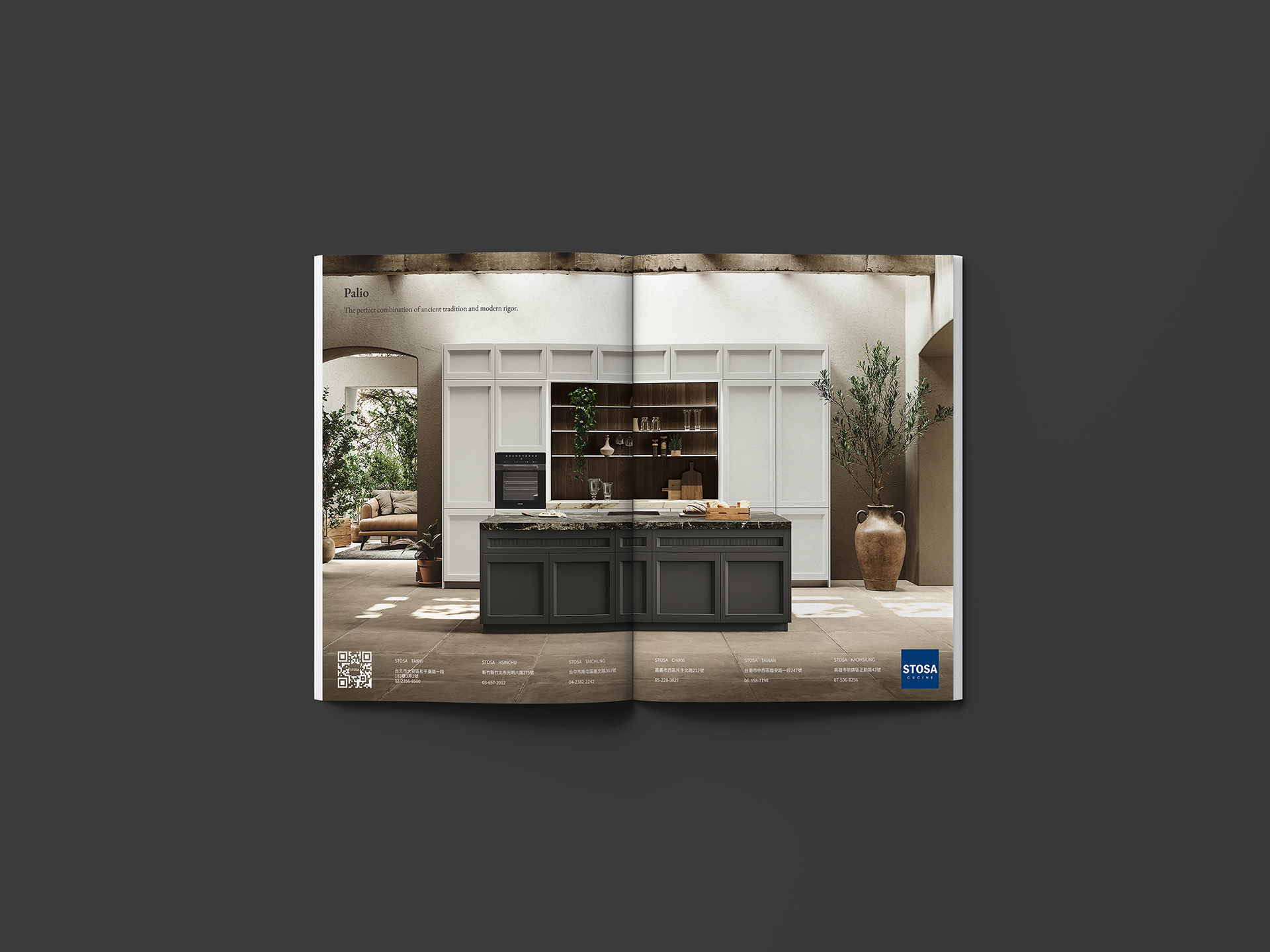
其中,Palio 系列全新的瑪薩拉色橡木,使用達 23 毫米厚實門片,
其縱向天然紋理是時間留存的印記,為空間注入溫度。
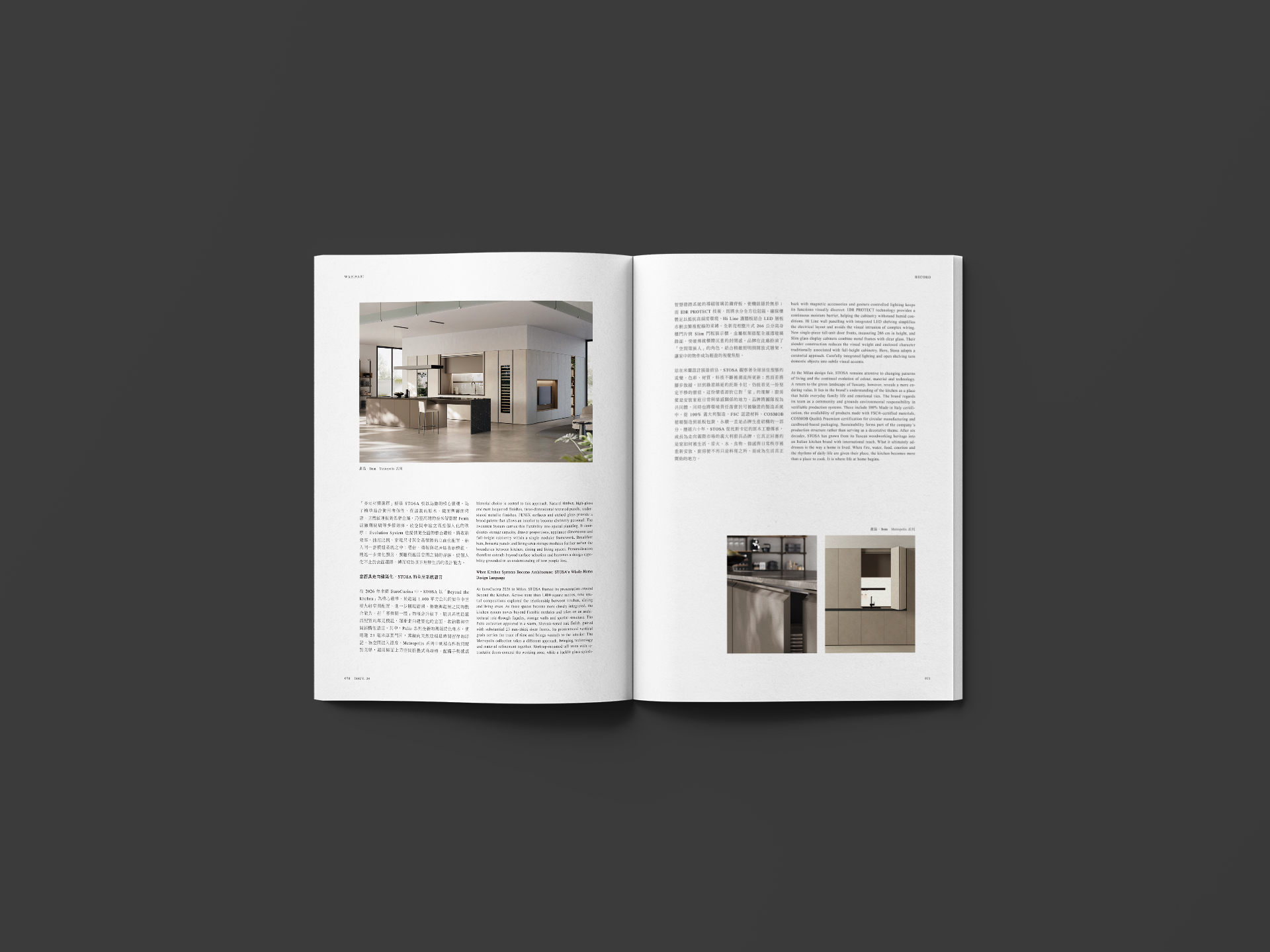
Metropolis 系列中則結合科技與材質美學,
運用檯面上方空間折疊式高身櫃、配備手勢感應智慧燈控系統的導磁玻璃防濺背板,使機能隱於無形;
而 IDR PROTECT 技術,則將水分全方位阻隔,確保櫃體足以抵抗高濕度環境,
Hi Line 護牆板結合 LED 層板亦刪去繁複配線的束縛。
全新亮相整片式 266 公分高身櫃門片與 Slim 門板展示櫃,
金屬框架搭配全通透玻璃飾面,突破傳統櫃體沉重的封閉感。
品牌在此處扮演了「空間策展人」的角色,結合精緻照明與開放式層架,讓家中的物件成為輕盈的視覺焦點。
站在米蘭設計展最前沿,STOSA 觀察著全球居住型態的流變,色彩、材質、科技不斷被潮流所更新;
然而若將腳步放緩,回到綠意綿延的托斯卡尼,仍能看見一份堅定不移的價值。
這份價值源於它對「家」的理解:廚房便是安放家庭日常與情感關係的地方。
品牌將團隊視為共同體,同時也將環境責任落實於可被驗證的製造系統中,
從 100% 義大利製造、FSC 認證材料、COSMOB 循環製造到紙板包裝,永續一直是品牌生產結構的一部分。
歷經六十年,STOSA 從托斯卡尼的原木工藝傳承,成長為走向國際市場的義大利廚具品牌,
它真正回應的是家如何被生活。當火、水、食物、情感與日常秩序被重新安放,
廚房便不再只是料理之所,而成為生活真正開始的地方。
Over millennia, forms of dwelling have evolved in response to geography
and culture. Even today, people continue to seek greater
eff iciency in preparing, storing and cooking food, supported by advances
in materials, spatial planning and equipment. Fire, water and
food have remained constants through time. Closely bound to survival,
they are also among our earliest sources of security. The contemporary
home is concerned not only with how we live, but with
how these elemental needs f ind their place in a daily life shaped by
comfort and emotional connection. A piece of timber from Tuscany
is, in essence, a poem of touch. Since 1964, the story of STOSA Cucine
has remained attentive to the grain, texture and emotional resonance
of wood. Under the f ingertips of craftspeople who repeatedly
check its dimensions and thickness, the rough surface is ref ined and
given cultural meaning. Its journey from the forests of Tuscany to
a private home on the other side of the world marks the beginning
of a spatial translation and a particular pleasure in inhabiting space.
Time slows in the kitchen. Material warmth awakens memories of
the table, and the hours spent there become part of a lived narrative
that can be recorded, read and deeply felt.
A Gentle Manifesto for Spatial Change: When the Kitchen Becomes
the Home’s Emotional Centre
Over recent decades, shifts in family structure and ways of living
have made the open-plan kitchen increasingly prevalent. Once a
closed, peripheral service space, it has moved to the centre of the
home. This transition has also marked a turning point in the language
of contemporary interiors, as the kitchen has increasingly been
conceived as part of the home’s wider furnishing scheme. The island
is no longer simply a rectilinear volume. It becomes a functional
sculpture embedded in everyday life, articulated through material,
thickness and proportion. Fronts and f inishes, once selected primarily
for stain and scratch resistance, now contribute colour, tactility and
light, allowing the kitchen to sit naturally within the wider interior.
For many people, there may be only one or two opportunities in a
lifetime to create the kitchen they truly want. More than most areas
of the home, the kitchen functions as a centre of energy, emotion and
order. Meals are prepared here. A sandwich and coffee offer a quick
pause in a busy day. Late at night, the same space may become a
private bar. Few rooms connect so many moments of everyday life.
The Kitchen as Self-Expression: A Stage for the Art of Living
STOSA’s work ref lects a clear understanding of how contemporary
domestic life is changing. As urban homes become more compact
and the boundary between work and private life less distinct ,
surface ref inement alone is no longer enough. A dining table may
double as a work surface for the home off ice. An island may extend
into the living room as shared territory. Cabinetry may form the
storage backdrop to the living area. Metal and glass move beyond
decoration to modulate light, depth and visual connection. This
range of expression forms part of STOSA’s forward-looking spatial
vocabulary. Woodworking remains its foundation. Today, STOSA
brings that craft heritage into dialogue with contemporary materials
and changing patterns of use, creating settings in which individual
ways of living can take form.
Material choice is central to this approach. Natural timber, high-gloss
and matt lacquered f inishes, three-dimensional textured panels, understated
metallic f inishes, FENIX surfaces and etched glass provide a
broad palette that allows an interior to become distinctly personal. The
Evolution System carries this f lexibility into spatial planning. It coordinates
storage capacity, drawer proportions, appliance dimensions and
full-height cabinetry within a single modular framework. Breakfast
bars, boiserie panels and living-area storage modules further soften the
boundaries between kitchen, dining and living spaces. Personalisation
therefore extends beyond surface selection and becomes a design capability
grounded in an understanding of how people live.
When Kitchen Systems Become Architecture: STOSA’s Whole-Home
Design Language
At EuroCucina 2026 in Milan, STOSA framed its presentation around
Beyond the Kitchen. Across more than 1,400 square metres, nine spatial
compositions explored the relationship between kitchen, dining
and living areas. As these spaces become more closely integrated, the
kitchen system moves beyond f lexible modules and takes on an architectural
role through façades, storage walls and spatial structure. The
Palio collection appeared in a warm, Marsala-toned oak f inish, paired
with substantial 23 mm-thick door fronts. Its pronounced ver tical
grain carries the trace of time and brings warmth to the interior. The
Metropolis collection takes a different approach, bringing technology
and material ref inement together. Worktop-mounted tall units with retractable
doors conceal the working zone, while a backlit
glass splashback with magnetic accessories and gesture-controlled lighting keeps
its functions visually discreet. IDR PROTECT technology provides a
continuous moisture barrier, helping the cabinetry withstand humid conditions.
Hi Line wall panelling with integrated LED shelving simplif ies
the electrical layout and avoids the visual intrusion of complex wiring.
New single-piece tall-unit door fronts, measuring 266 cm in height, and
Slim glass display cabinets combine metal frames with clear glass. Their
slender construction reduces the visual weight and enclosed character
traditionally associated with full-height cabinetry. Here, Stosa adopts a
curatorial approach. Carefully integrated lighting and open shelving turn
domestic objects into subtle visual accents.
At the Milan design fair, STOSA remains attentive to changing patterns
of living and the continual evolution of colour, material and technology.
A return to the green landscape of Tuscany, however, reveals a more enduring
value. It lies in the brand’s understanding of the kitchen as a place
that holds everyday family life and emotional ties. The brand regards
its team as a community and grounds environmental responsibility in
verif iable production systems. These include 100% Made in Italy certif ication,
the availability of products made with FSC®-certif ied materials,
COSMOB Qualità Praemium certif ication for circular manufacturing and
cardboard-based packaging. Sustainability forms part of the company’s
production structure rather than serving as a decorative theme. After six
decades, STOSA has grown from its Tuscan woodworking heritage into
an Italian kitchen brand with international reach. What it ultimately addresses
is the way a home is lived. When f ire, water, food, emotion and
the rhythms of daily life are given their place, the kitchen becomes more
than a place to cook. It is where life at home begins.
and culture. Even today, people continue to seek greater
eff iciency in preparing, storing and cooking food, supported by advances
in materials, spatial planning and equipment. Fire, water and
food have remained constants through time. Closely bound to survival,
they are also among our earliest sources of security. The contemporary
home is concerned not only with how we live, but with
how these elemental needs f ind their place in a daily life shaped by
comfort and emotional connection. A piece of timber from Tuscany
is, in essence, a poem of touch. Since 1964, the story of STOSA Cucine
has remained attentive to the grain, texture and emotional resonance
of wood. Under the f ingertips of craftspeople who repeatedly
check its dimensions and thickness, the rough surface is ref ined and
given cultural meaning. Its journey from the forests of Tuscany to
a private home on the other side of the world marks the beginning
of a spatial translation and a particular pleasure in inhabiting space.
Time slows in the kitchen. Material warmth awakens memories of
the table, and the hours spent there become part of a lived narrative
that can be recorded, read and deeply felt.
A Gentle Manifesto for Spatial Change: When the Kitchen Becomes
the Home’s Emotional Centre
Over recent decades, shifts in family structure and ways of living
have made the open-plan kitchen increasingly prevalent. Once a
closed, peripheral service space, it has moved to the centre of the
home. This transition has also marked a turning point in the language
of contemporary interiors, as the kitchen has increasingly been
conceived as part of the home’s wider furnishing scheme. The island
is no longer simply a rectilinear volume. It becomes a functional
sculpture embedded in everyday life, articulated through material,
thickness and proportion. Fronts and f inishes, once selected primarily
for stain and scratch resistance, now contribute colour, tactility and
light, allowing the kitchen to sit naturally within the wider interior.
For many people, there may be only one or two opportunities in a
lifetime to create the kitchen they truly want. More than most areas
of the home, the kitchen functions as a centre of energy, emotion and
order. Meals are prepared here. A sandwich and coffee offer a quick
pause in a busy day. Late at night, the same space may become a
private bar. Few rooms connect so many moments of everyday life.
The Kitchen as Self-Expression: A Stage for the Art of Living
STOSA’s work ref lects a clear understanding of how contemporary
domestic life is changing. As urban homes become more compact
and the boundary between work and private life less distinct ,
surface ref inement alone is no longer enough. A dining table may
double as a work surface for the home off ice. An island may extend
into the living room as shared territory. Cabinetry may form the
storage backdrop to the living area. Metal and glass move beyond
decoration to modulate light, depth and visual connection. This
range of expression forms part of STOSA’s forward-looking spatial
vocabulary. Woodworking remains its foundation. Today, STOSA
brings that craft heritage into dialogue with contemporary materials
and changing patterns of use, creating settings in which individual
ways of living can take form.
Material choice is central to this approach. Natural timber, high-gloss
and matt lacquered f inishes, three-dimensional textured panels, understated
metallic f inishes, FENIX surfaces and etched glass provide a
broad palette that allows an interior to become distinctly personal. The
Evolution System carries this f lexibility into spatial planning. It coordinates
storage capacity, drawer proportions, appliance dimensions and
full-height cabinetry within a single modular framework. Breakfast
bars, boiserie panels and living-area storage modules further soften the
boundaries between kitchen, dining and living spaces. Personalisation
therefore extends beyond surface selection and becomes a design capability
grounded in an understanding of how people live.
When Kitchen Systems Become Architecture: STOSA’s Whole-Home
Design Language
At EuroCucina 2026 in Milan, STOSA framed its presentation around
Beyond the Kitchen. Across more than 1,400 square metres, nine spatial
compositions explored the relationship between kitchen, dining
and living areas. As these spaces become more closely integrated, the
kitchen system moves beyond f lexible modules and takes on an architectural
role through façades, storage walls and spatial structure. The
Palio collection appeared in a warm, Marsala-toned oak f inish, paired
with substantial 23 mm-thick door fronts. Its pronounced ver tical
grain carries the trace of time and brings warmth to the interior. The
Metropolis collection takes a different approach, bringing technology
and material ref inement together. Worktop-mounted tall units with retractable
doors conceal the working zone, while a backlit
glass splashback with magnetic accessories and gesture-controlled lighting keeps
its functions visually discreet. IDR PROTECT technology provides a
continuous moisture barrier, helping the cabinetry withstand humid conditions.
Hi Line wall panelling with integrated LED shelving simplif ies
the electrical layout and avoids the visual intrusion of complex wiring.
New single-piece tall-unit door fronts, measuring 266 cm in height, and
Slim glass display cabinets combine metal frames with clear glass. Their
slender construction reduces the visual weight and enclosed character
traditionally associated with full-height cabinetry. Here, Stosa adopts a
curatorial approach. Carefully integrated lighting and open shelving turn
domestic objects into subtle visual accents.
At the Milan design fair, STOSA remains attentive to changing patterns
of living and the continual evolution of colour, material and technology.
A return to the green landscape of Tuscany, however, reveals a more enduring
value. It lies in the brand’s understanding of the kitchen as a place
that holds everyday family life and emotional ties. The brand regards
its team as a community and grounds environmental responsibility in
verif iable production systems. These include 100% Made in Italy certif ication,
the availability of products made with FSC®-certif ied materials,
COSMOB Qualità Praemium certif ication for circular manufacturing and
cardboard-based packaging. Sustainability forms part of the company’s
production structure rather than serving as a decorative theme. After six
decades, STOSA has grown from its Tuscan woodworking heritage into
an Italian kitchen brand with international reach. What it ultimately addresses
is the way a home is lived. When f ire, water, food, emotion and
the rhythms of daily life are given their place, the kitchen becomes more
than a place to cook. It is where life at home begins.